


Situation: The Business-Brand Disconnect
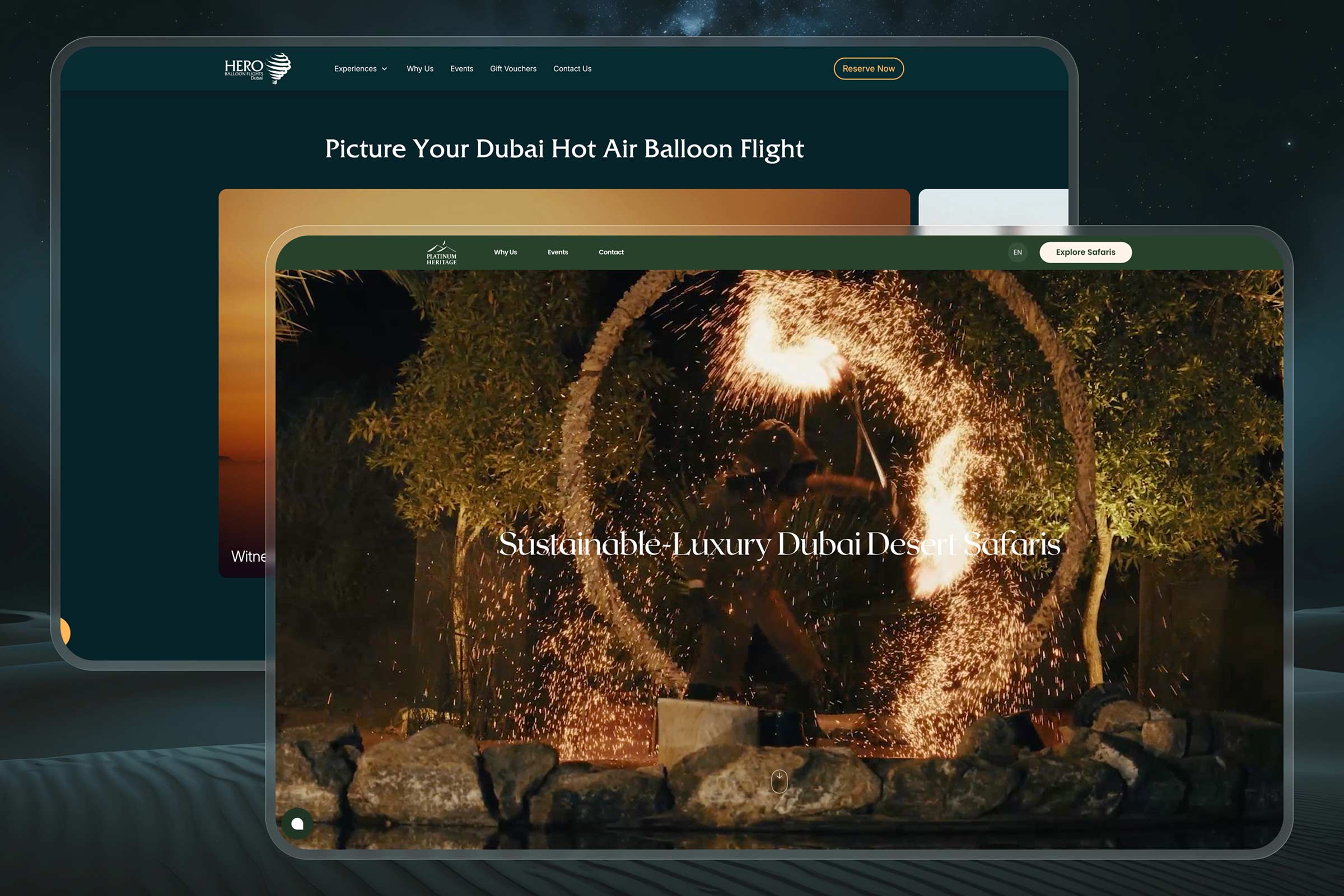
Hero Experience Group (HEG), home to market-leading luxury brands like Platinum Heritage, was facing a major internal crisis: the entire digital ecosystem was operating in chaos, actively undermining business profitability and brand reputation.
-
Conversion inefficiency
Mobile traffic (80%) converted at only 5% to 8% of all web bookings. Users were less keen on booking on their mobile devices, often leading them to switch to a desktop or even a high-cost booking channel (like the Reservation team) to complete their purchase.
-
The Brand Integrity Failure
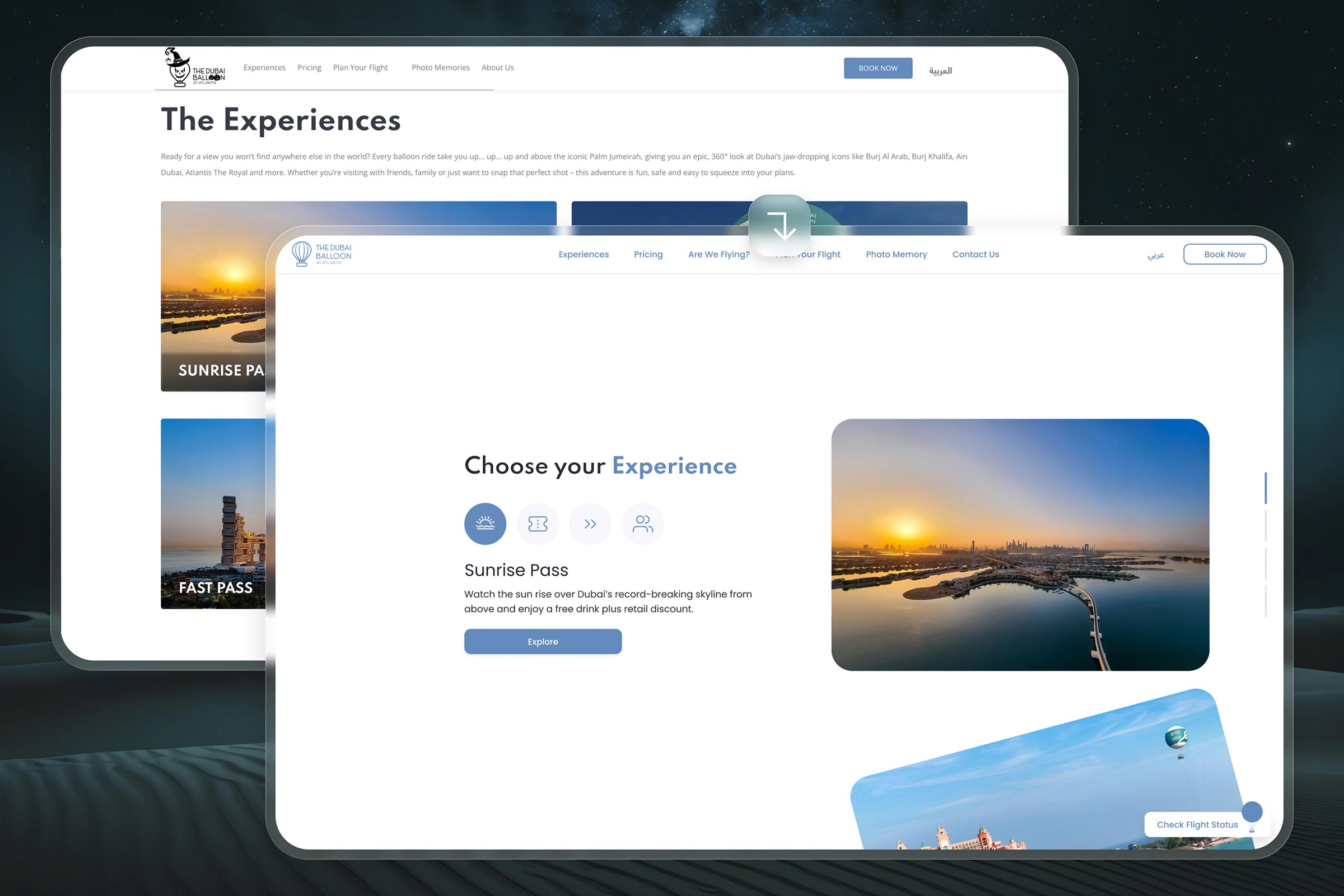
The luxury promise was undermined by "regular company websites". Design and development were managed by outsourced agencies, resulting in mediocre visual quality and 5 separate, unaligned design languages that created confusion and eroded trust.
-
The Operational Chaos
There was no in-house UX expertise to connect design to strategy. The lack of standardized systems and oversight led to a chaotic, high-friction development process with unmonitored technical debt, jeopardizing long-term stability and efficiency.
Task: Establish Strategic UX Leadership
My task was to transition HEG from outsourced mediocrity to in-house strategic excellence. This required not just a redesign, but full product ownership with three quantifiable objectives:
-
Revenue Fix
Increase highly profitable web checkouts, primarily by solving the mobile conversion problem.
-
Efficiency Fix
Eliminate the chaos of multiple design languages to reduce operational cost and design-to-development time.
-
Resilience Fix
Stabilize the product ecosystem by implementing quality assurance and technical monitoring.
Action: Holistic Transformation and Product Ownership
The solution was a comprehensive, data-driven overhaul of the entire product ecosystem, spanning design, operations, and technical resilience, completed within one year.
Strategic and Systemic Interventions
-
Data-Driven Pivot
Used GA4 and Clarity data (in lieu of traditional interviews) to confirm the 80% mobile traffic with 5% conversion rate was the high-leverage target.
-
Operational Efficiency
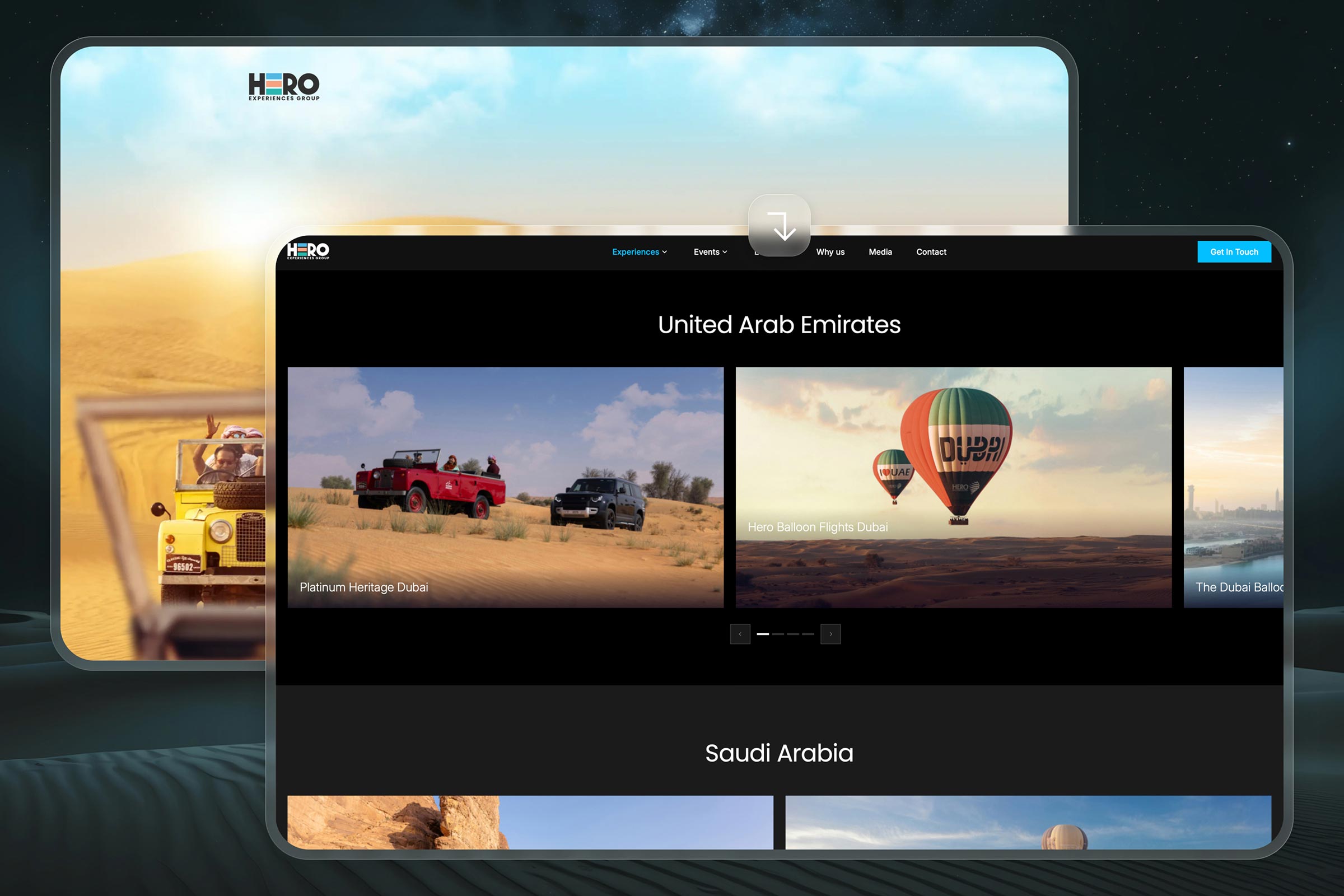
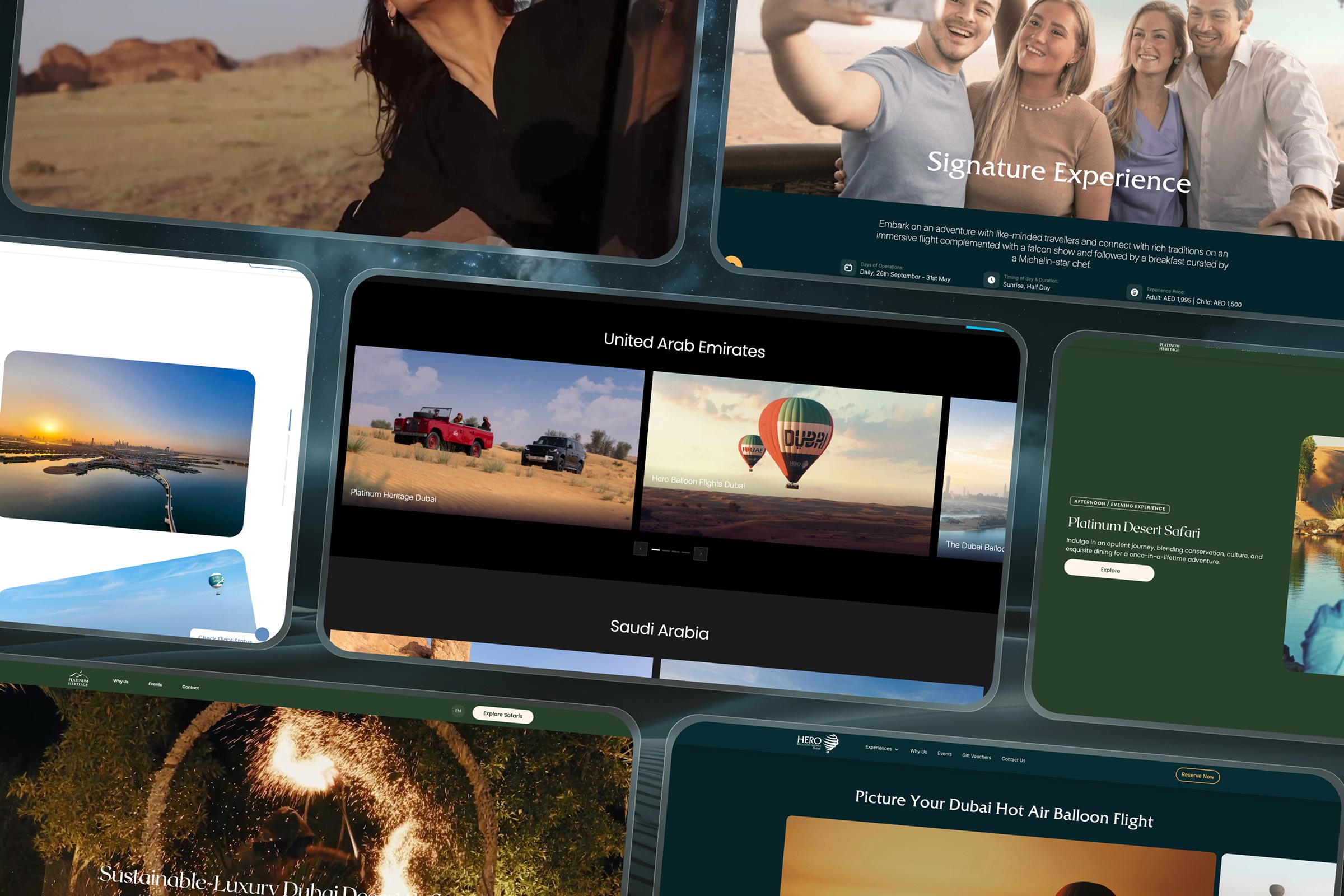
Initiated and built a single, unified Hero Design System to consolidate the design languages of all five brands, standardizing components and visual direction.
-
Aesthetic & Content Strategy
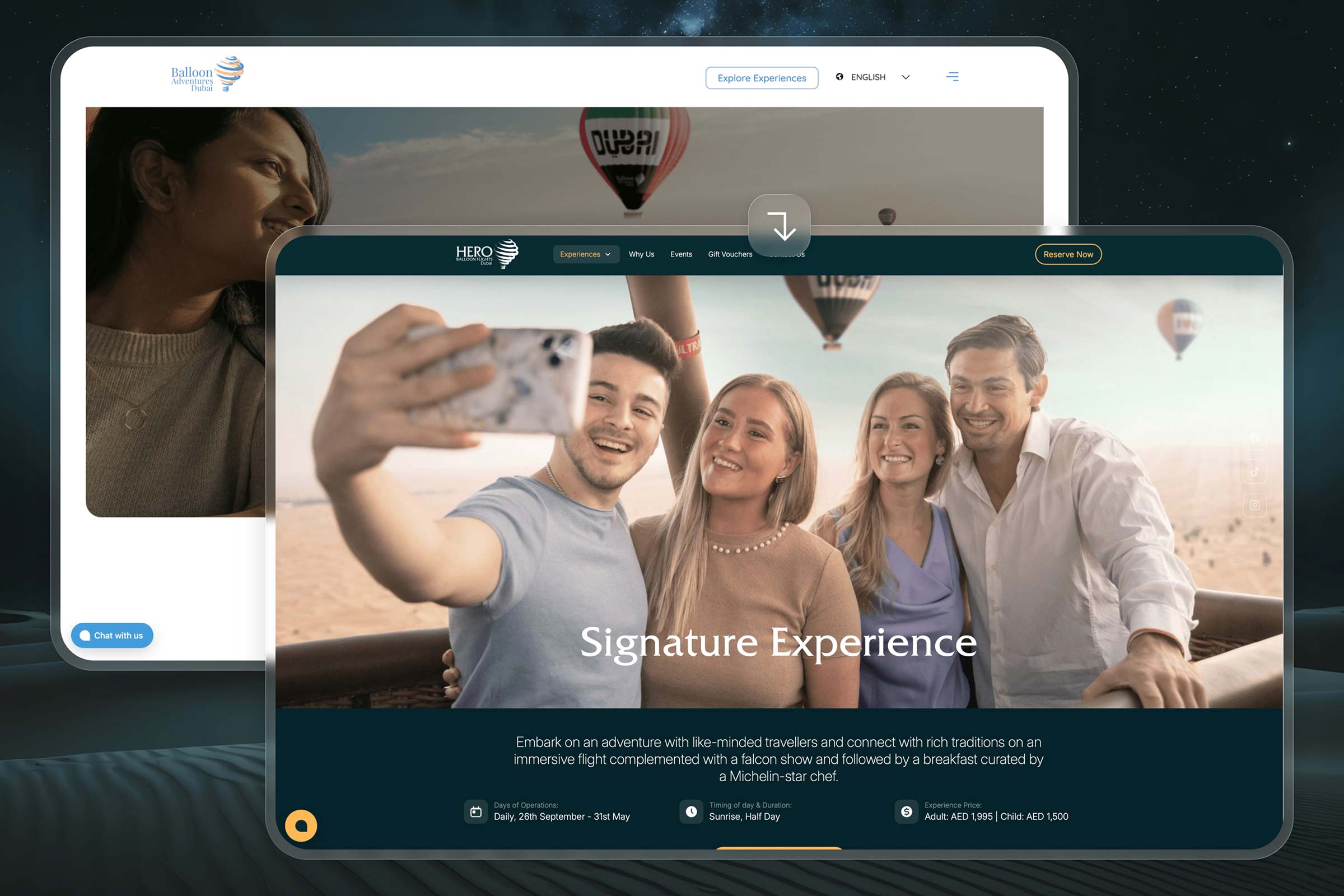
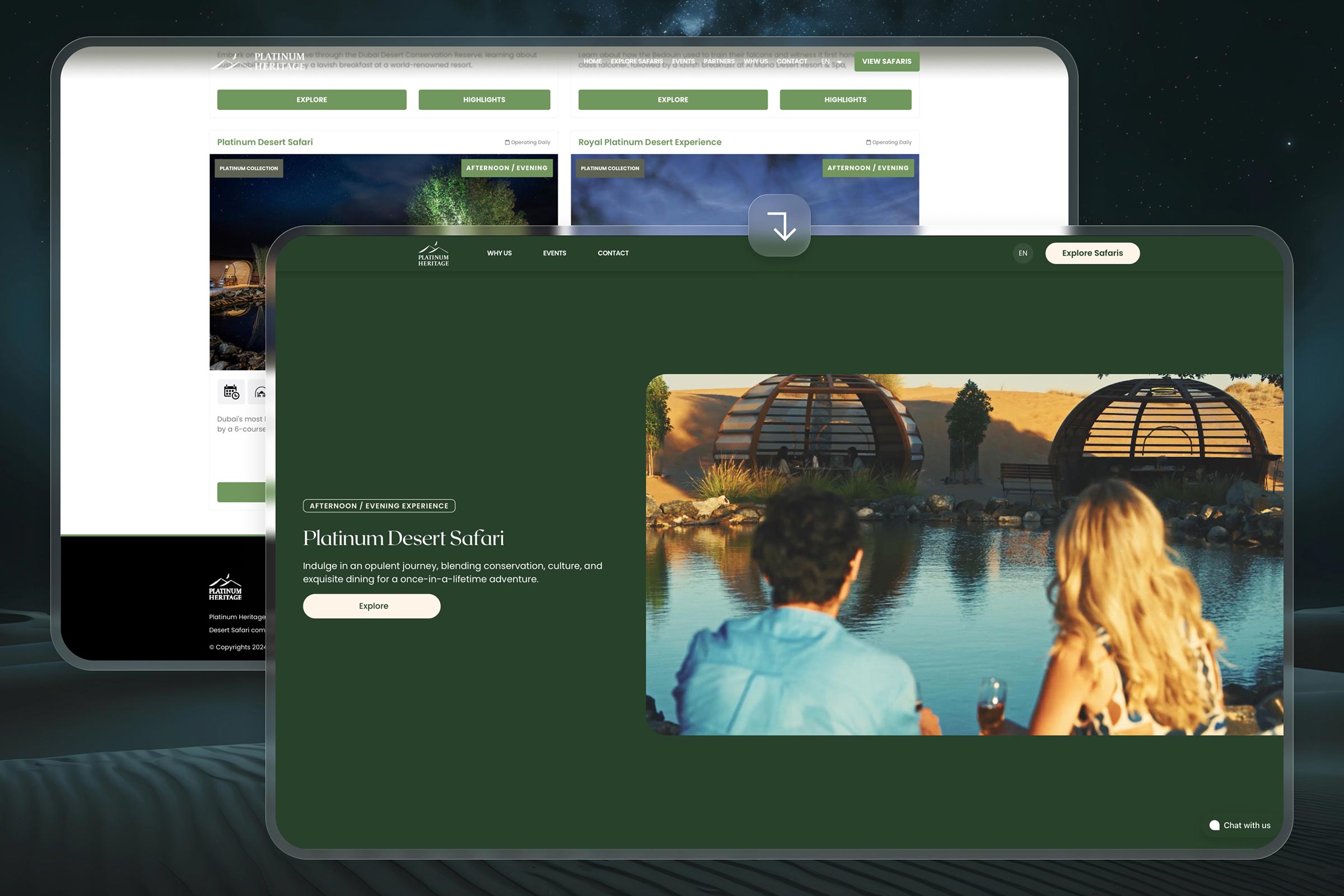
Introduced a dark-mode, minimalistic design with optimized, high-quality visuals to elevate the brand. Educated the content team on cognitive load principles (e.g., the 7±2 rule) to ensure scannable, luxury-aligned text.
Data-Driven Usability & Architecture
-
Checkout Optimization
Implemented a mobile-first design strategy and made targeted changes across the entire booking flow, including re-ordering navigation based on page visit data and implementing sticky booking buttons based on mobile click data.
-
Bounce Rate Analysis
Used GA4 bounce rate data to pinpoint user abandonment points, leading to page structure reorganization that prioritized high-value, high-conversion content.
-
Click-Rate Usability Fixes
Analyzed element click rates to correct usability flaws, such as changing the color of non-clickable icons users were mistaking for buttons.
Operational Resilience & Product QA
-
Risk Mitigation (Downtime)
After diagnosing revenue loss from un-monitored crashes via Clarity recordings, I implemented Betterstack.com monitoring across all sites.
-
Full Product Ownership
Assumed responsibility for the entire QA process (testing 3x weekly) and served as the dedicated liaison between the company and the development team, managing task handover and quality control.
-
Dev Process Management
Served as the dedicated technical liaison between the company and the outsourced development team, managing the workflow, communicating business goals, and overseeing the final technical handover quality.
Results
While this is a long-term strategic effort, the measurable outcomes have successfully transformed the market landscape:
-
600%+ Mobile Conversion Uplift
The mobile-first pivot successfully solved the core mobile revenue bottleneck. Mobile checkout increased dramatically from an initial 5%−8% to 55% of all web bookings on the HBFD site.
-
Business Growth
The latest redesign of the Platinum Heritage website showed a +25% increase in online bookings since the start of the season, validating the long-term effectiveness of the new UX strategy.
-
Systemic Efficiency and Quality
The unified Hero Design System led to a 60% reduction in design-to-development time. This systemic efficiency, coupled with rigorous QA, also resulted in a 200% increase in issue identification.
-
Operational Resilience and Risk Mitigation
Mitigated major revenue risk: By implementing Betterstack monitoring and assuming QA responsibility, the time required to diagnose critical website downtime was reduced from hours to minutes.
Key Learnings
-
Strategic Research
Working in the luxury tourism industry taught me that traditional UX methods aren't always feasible due to constraints like high-profile clientele. I learned to strategically substitute data science (GA4/Clarity) for interviews, supplementing it with competitive analysis of global luxury brands and took specialized courses to ensure informed design decisions.
-
UX for Operational Excellence
The critical server downtime incident was a firsthand lesson in how quickly technical failures translate to severe business loss. This led me to proactively adopt tools like Betterstack for monitoring, confirming that senior UX ownership must extend into operational safety to protect business viability and uptime.
-
PM Mindset in Design
Transitioning from a team member to a bridge between management and development required me to evolve beyond pure design. I am actively learning the Product Management process by overseeing cost, mitigating technical risks, and synthesizing business, technical, and user psychology to make highly analyzed strategic decisions.
-
Scaling Systems
Building the Hero Design System required tackling the central challenge of multi-brand versatility and organization. This led me to conduct intensive research and master the advanced methods for developing Variables in Figma, a skill that now allows me to organize and build design systems with remarkable speed and simplicity.
