


Situation: Operational Inefficiency
The redesign began because the Wing Driver App caused confusion and inefficiency, directly impacting delivery speed, performance, and customer satisfaction.
-
Crippling Work Inefficiency
The app's lack of automated sorting forced drivers into complex manual operational tasks—sorting parcels by physical address and manually deciding the most efficient route and delivery order. This wasted up to 45-60 minutes of crucial delivery time per driver daily.
-
Customer Friction
The existing in-app navigation was confusing or easily ignored. Consequently, drivers defaulted to using WhatsApp to call customers for location updates, resulting in a high volume of customer complaints and undermining the service experience.
-
No Performance Management
The platform lacked essential tools for driver motivation and accountability, offering no performance dashboard or clear metrics (e.g., success rate, COD payments). This absence of transparency made it hard to track or reward high-performing drivers.
Task: Automate and Stabilize Operations
My task was to rethink the driver app architecture to eliminate manual work, resolve the chaos, & stabilize operational work.
-
Automate Friction
Eliminate complex manual sorting and routing tasks to free up driver time and significantly reduce delivery errors.
-
Improve Customer Experience
Redesign the navigation and location request flows to eliminate the need for drivers to use external apps (like WhatsApp).
-
Add System Transparency
Introduce a reliable, visible performance dashboard to boost driver motivation and provide the business with essential management metrics.
Action: Systemic Automation & Operational Empathy
Working closely with the Product Manager, Operational Manager, and the Support team, the design process focused on overcoming research constraints with strategic stakeholder collaboration and systemic fixes.
Resourceful Research & Stakeholder Insights
-
Resourceful Research
Overcame budget/time constraints by conducting in-depth interviews with Support and Operations teams to establish core pain points.
-
Automated Sorting & Routing
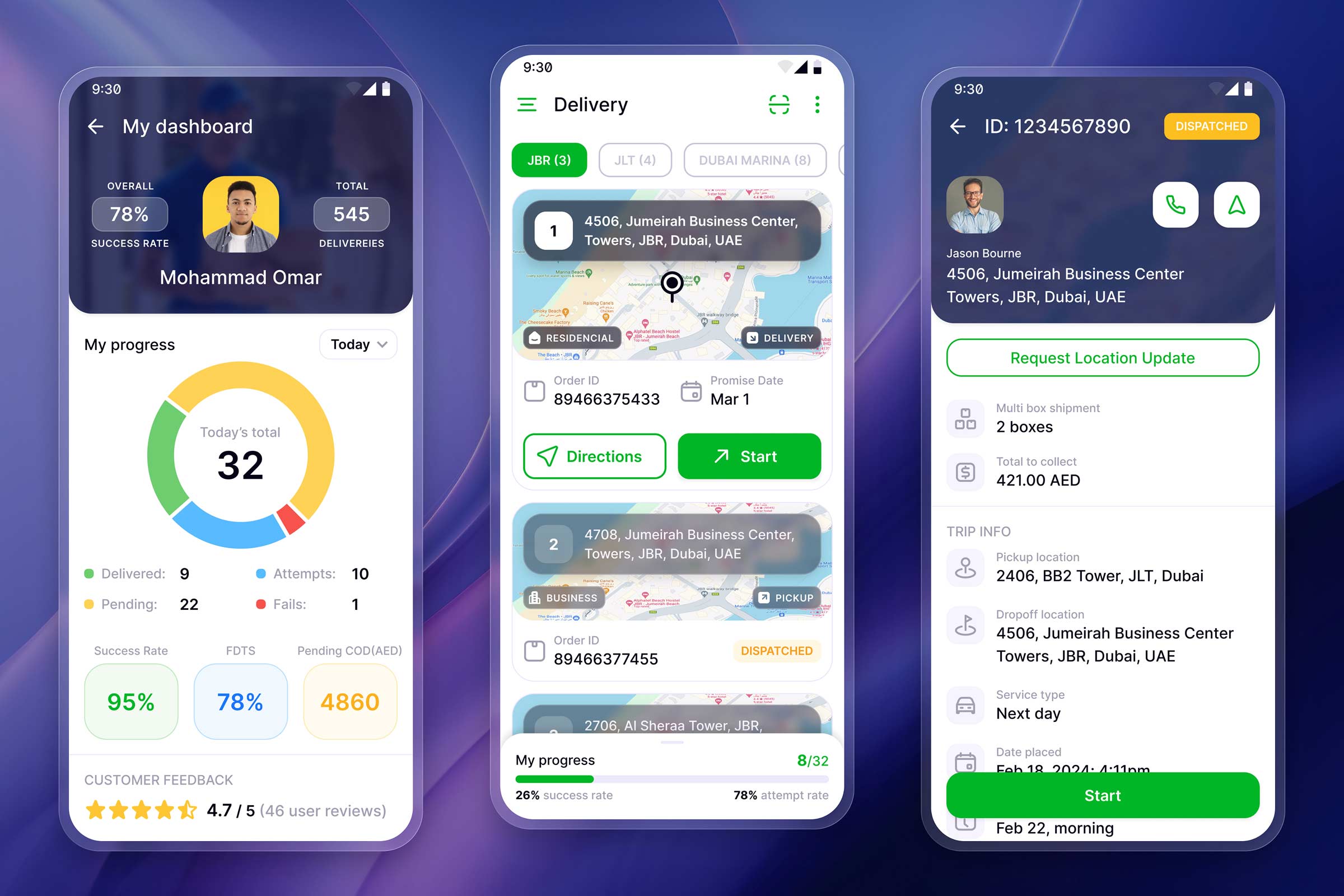
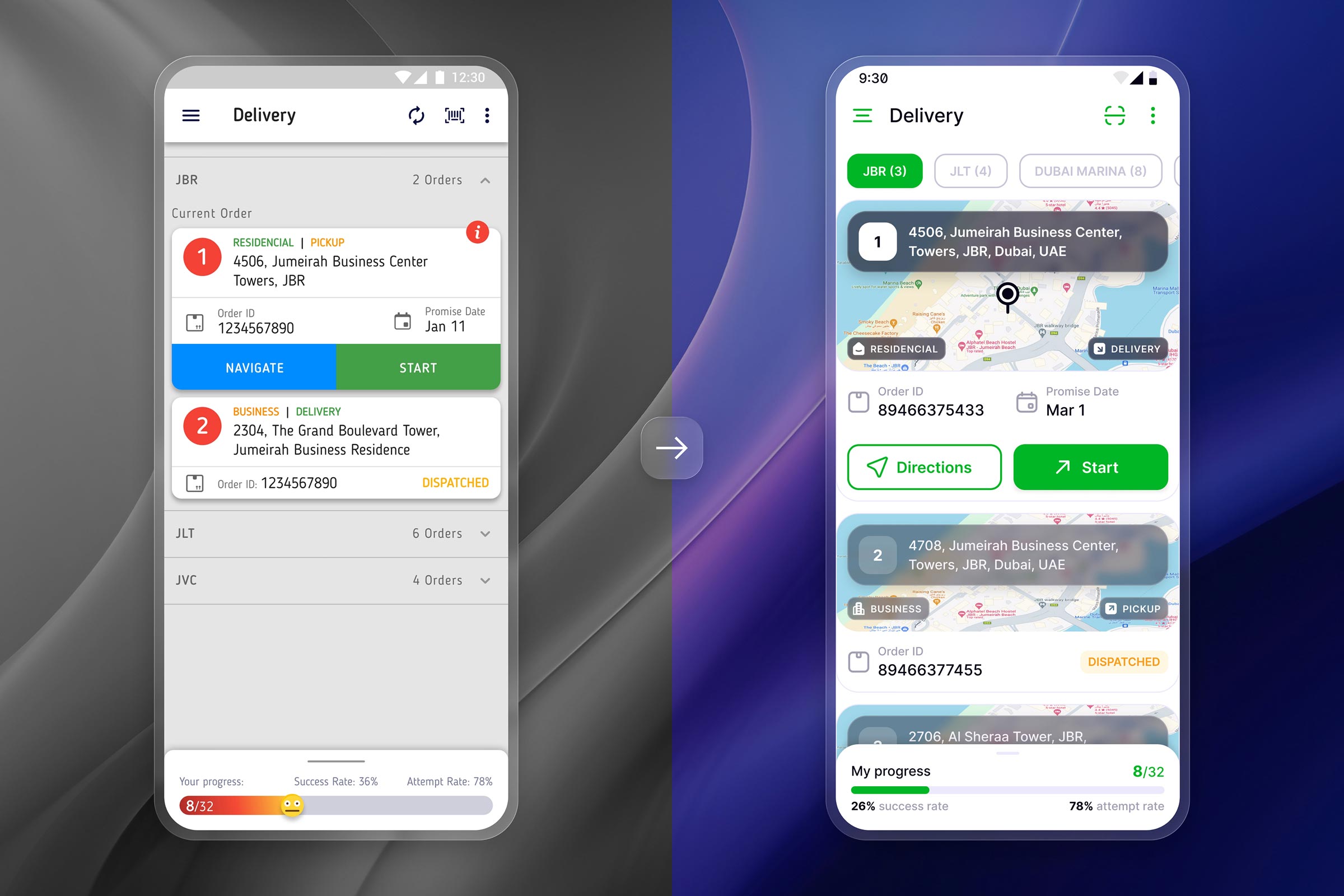
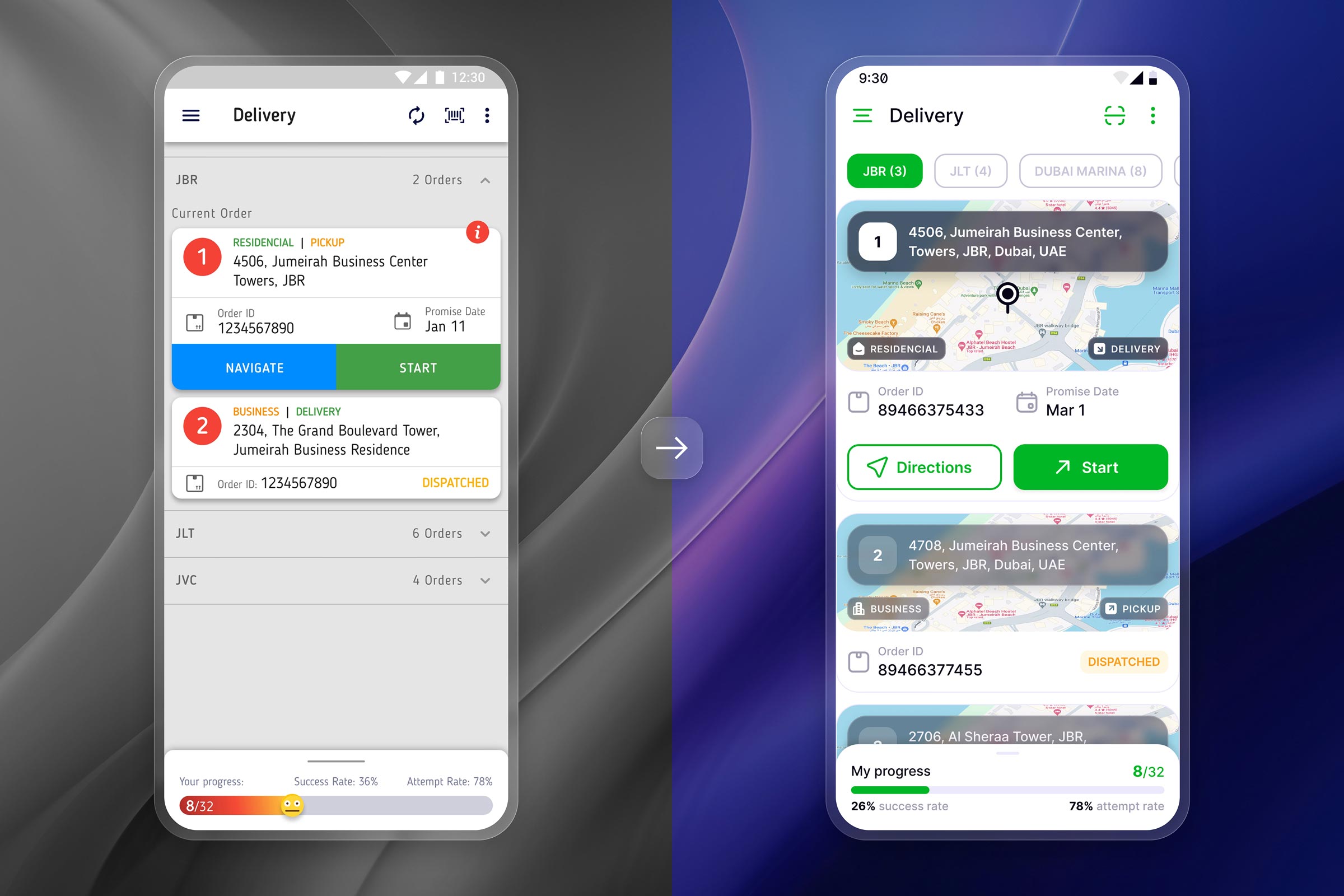
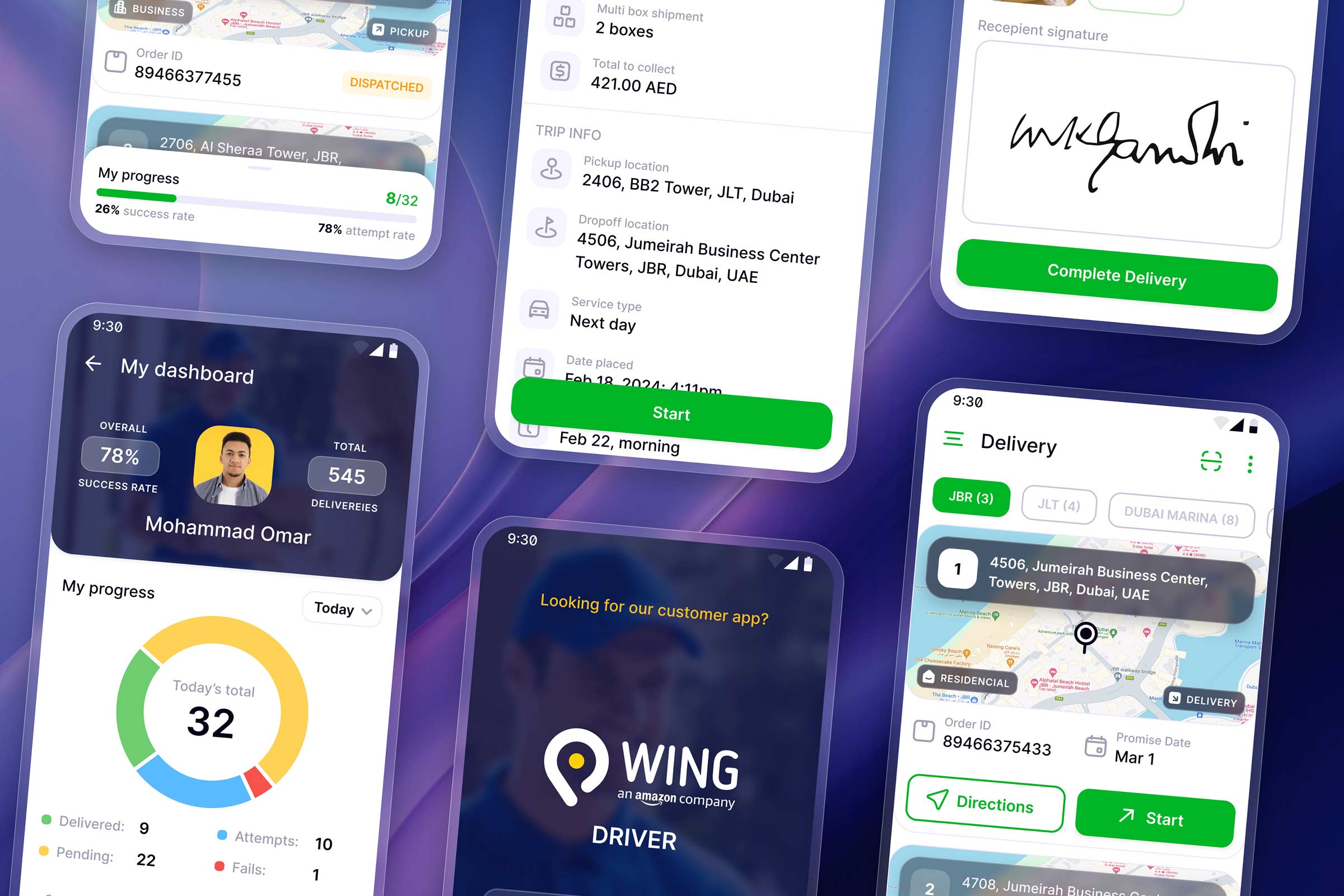
Designed the system to automatically sort shipments by address and proximity, successfully eliminating the daily manual sorting task.
-
Reduced Customer Friction
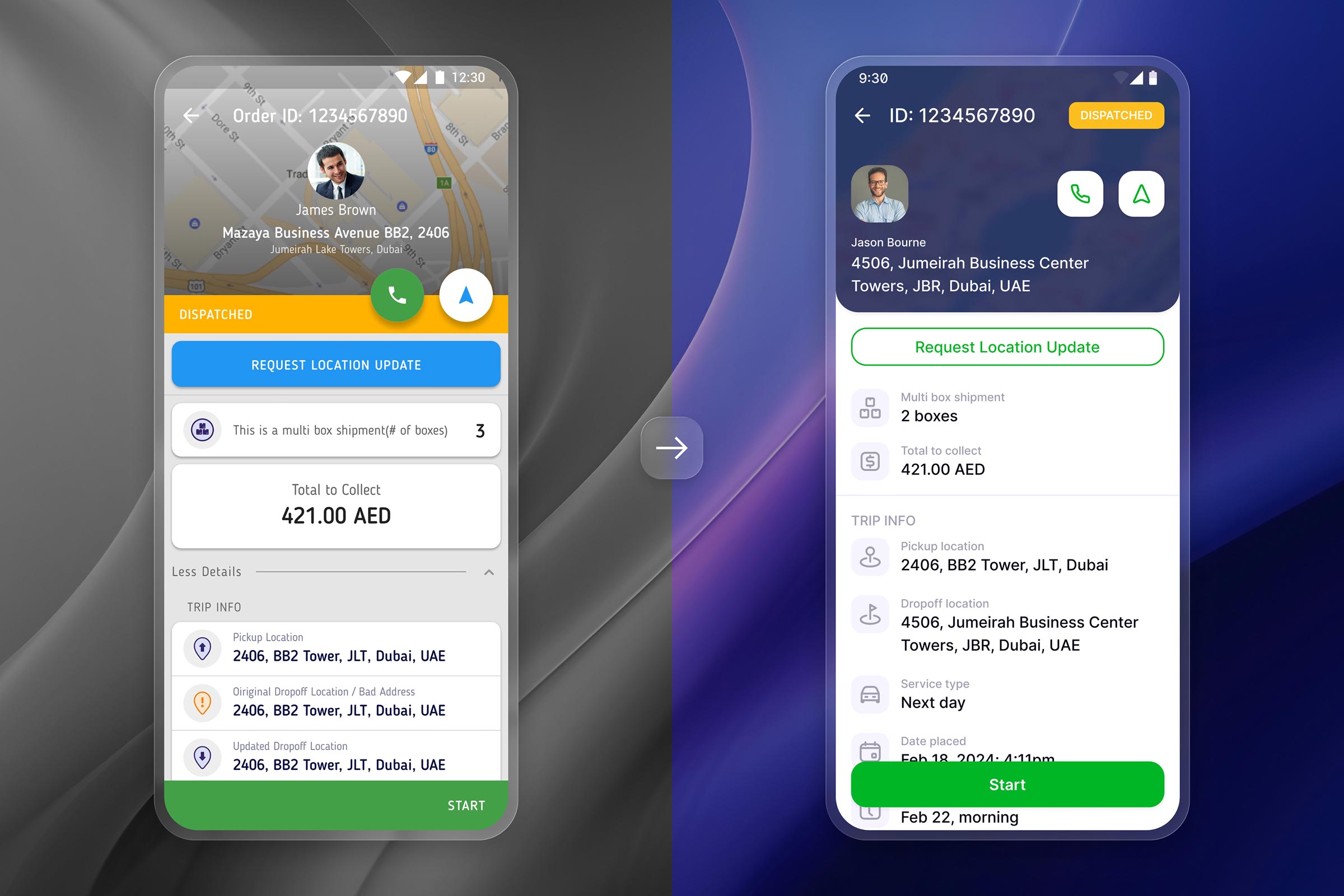
Redesigned the location flow to hide customer phone numbers, replacing it with an intuitive "Request location update" button to stop drivers from using WhatsApp and eliminate complaints.
Essential Tooling and Operational Excellence
-
Design Validation with Drivers
Before jumping into development, the design was rigorously tested with actual drivers to capture their crucial feedback and verify the design changes, ensuring the solution met real-world operational needs and de-risking the entire project.
-
Performance Dashboard
Designed a comprehensive dashboard providing essential driver metrics (success rates, CODs, etc.), boosting motivation and providing crucial management data.
-
Intuitive Transfer Flow
Created a new, efficient flow with Incoming/Outgoing tabs to manage emergency order transfers between drivers, filling a critical operational gap.
-
Proactive System Fix
During a field study, I uncovered and immediately facilitated the resolution of a months-long technical issue that was slowing deliveries and causing drivers frustration.
Results
While this is a long-term strategic effort, the measurable outcomes have successfully transformed the market landscape:
-
Growth & Scale Validation
The design was so efficient that helped the platform scale, now supporting 5K+ drivers across a global network of 50+ courier companies and helped to complete over 100M shipment deliveries. This proved the system was built not just to solve problems, but to handle exponential future growth.
-
Significant Efficiency Gains
The automation of sorting and routing flows eliminated the 45-60 minutes daily manual task per driver. Drivers provided positive feedback, noting how the new system was much simpler, directly contributing to a rise in delivery efficiency and speed.
-
Improved Customer & Service Quality
The redesign of the location request flow successfully curbed reliance on external apps (WhatsApp). This intervention reduced customer complaints related to location requests, stabilizing the customer-facing service experience.
-
Operational Stability & Ownership
Demonstrating product ownership, I identified and resolved a months-long technical issue that had been slowing deliveries. This action improved driver trust, enhanced system stability, and proved the value of proactive field-based QA.
Key Learnings
-
Proactive Problem Resolution
Time on the ground proved critical. A single field study visit uncovered and diagnosed a months-long technical issue. This demonstrated that proactive operational observation is often the fastest way to resolve critical technical debt and stabilize a product.
-
Leveraging Support Insights
Due to research constraints, analyzing high volumes of customer center complaints became our primary method. This revealed systemic flaws (e.g., location requests) and proved the Support team is a powerful, high-fidelity proxy for user testing and customer sentiment.
-
Design for Long-Term Business Vision
Design decisions must align explicitly with long-term business vision. By clearly understanding the goal to scale the platform, I focused the design on systemic automation, ensuring the app was built as a catalyst for exponential growth.
-
Prioritizing Direct Resolution
When the critical operational issue was discovered, I prioritized direct resolution over formal process. By approaching the developer directly, we diagnosed and resolved the issue within hours, demonstrating that cross-functional urgency protects the business more effectively than rigid process.
